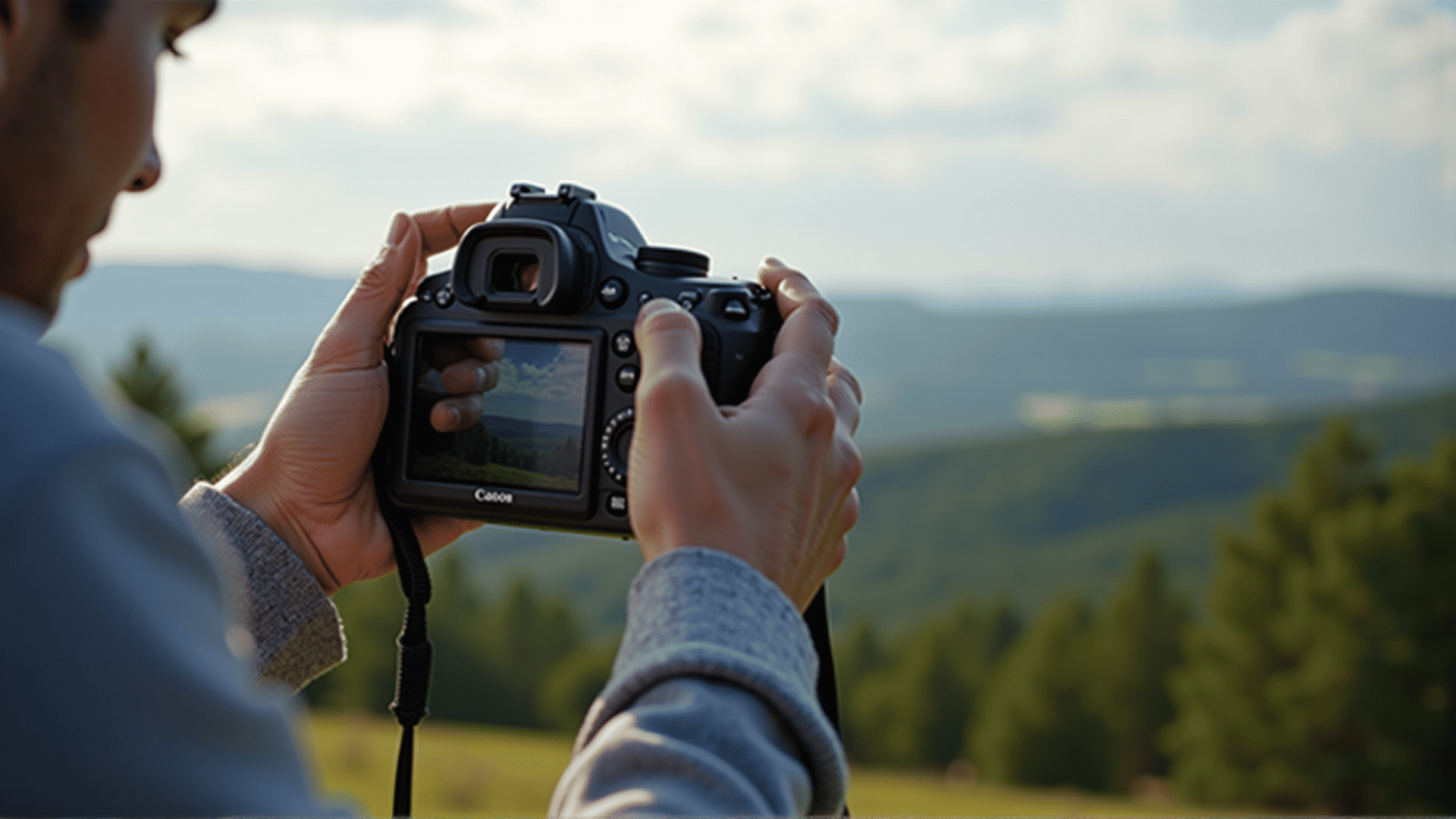
Understanding the fundamental settings of your camera is key to capturing stunning shots. It enables photographers to fully utilize their equipment, leading to breathtaking images. Let's delve into some essential techniques, ranging from exposure settings to shutter speed mastery.
Exposure Settings
Exposure controls the amount of light that reaches your camera sensor, crucially impacting how bright or dark your image will appear. It is defined by three primary elements: aperture, shutter speed, and ISO. Balancing these three components, often referred to as the "exposure triangle," allows photographers to achieve optimal exposure.
-
Aperture: This refers to the size of the lens opening through which light enters. Measured in f-stops, a lower number (e.g., f/2.8) means a larger aperture, allowing more light and providing a shallow depth of field, which is great for portraits. Conversely, a higher number (e.g., f/16) means a smaller aperture, suitable for landscapes where more of the scene should be in focus.
-
Shutter Speed: This is the length of time the camera's shutter remains open to let in light. A fast shutter speed (e.g., 1/1000 second) can freeze fast-moving subjects, perfect for action shots or capturing wildlife. A slower shutter speed (e.g., 1/30 second) allows more light but can cause motion blur, useful in conveying movement in creative ways like light trails.
-
ISO: This setting determines your camera sensor's sensitivity to light. A lower ISO (e.g., 100) is typically used in bright conditions to minimize grain, while a higher ISO (e.g., 3200) can be advantageous in low-light scenarios, though it may introduce noise to the image.
Mastering Shutter Speed
Understanding shutter speed is pivotal for capturing motion effectively. By manipulating this setting, photographers can either freeze action crisply or produce a sense of movement in their photos.
-
Freezing Motion: Use a fast shutter speed to capture sharp images of rapidly moving subjects. This technique is commonly applied in sports photography or when photographing wildlife in action.
-
Creating Motion Blur: Opt for a slower shutter speed to introduce intentional blur, conveying motion. This is popular in landscape photography to smooth moving water or in urban settings to blur crowds or vehicle lights.
Practical Tips
-
Experiment with Manual Mode: Switching from auto to manual mode encourages experimentation and a deeper understanding of your camera's capabilities. Practice balancing the exposure triangle manually to adapt to varying lighting conditions.
-
Utilize the Histogram: A histogram can assist you in evaluating the exposure of your photograph. It graphs the tonal range from dark to light, helping you make informed adjustments to settings.
-
Practice Dynamic Range: Your camera’s dynamic range defines its ability to capture details in the brightest and darkest parts of a photo. Seek out different lighting scenarios to practice capturing a wide range of tones without losing detail.
Conclusion
Mastering your camera’s basics is an empowering step towards creative freedom in photography. By comprehending how exposure settings, particularly shutter speed, affect your images, you can enhance your ability to document striking and impactful visuals. Continue to practice and experiment, and you’ll find your skills grow significantly, enabling you to capture the world in ever more compelling ways.